Aquatic Therapy University · Webinar
Aquatics
Okay, let’s talk about the pool.
Aquatic therapy is my favorite thing to nerd out about. I stumbled into the magical world of aquatics on my very first fieldwork and never really got out. This page is for anyone who’s curious, whether you’re a student, a practitioner, or an academic: why the pool can work, how to get trained, and what the research says. (And no, it’s not for everyone. We’ll talk about that too.)
How I got here
From one fieldwork to a certification
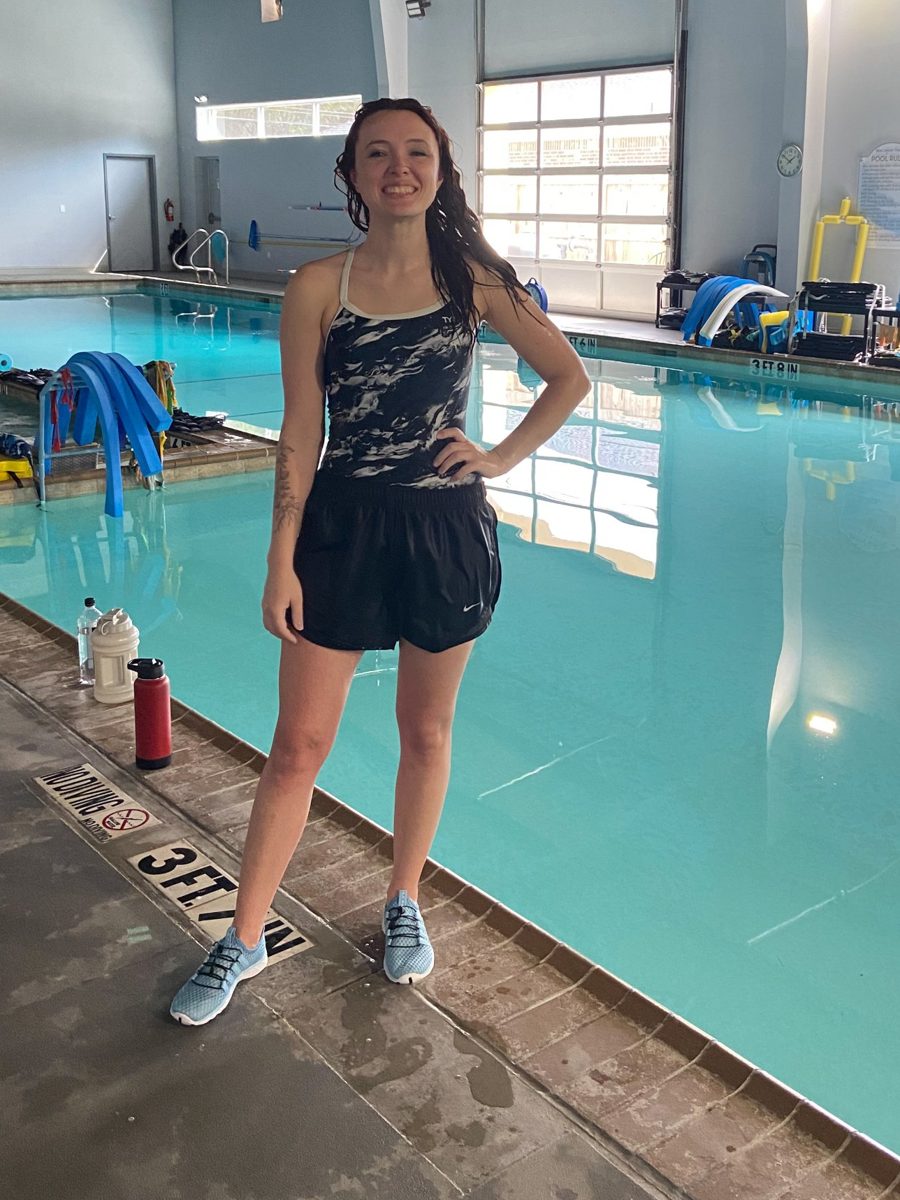
I was introduced to aquatic therapy on my first Level I fieldwork. On my second Level II fieldwork, my fieldwork educator was in the process of getting certified in aquatics, and I was hooked.
I went on to certify with Aquatic Therapy University as an Aquaticist, both as a generalist and in pediatrics. Now my goal is to share why the pool can work, and to help more people explore it, consider it, and learn how it’s used.
Courses I teach
On-demand webinars with Aquatic Therapy University
Use code KOZEYOT for a discount.
Aquatic Therapy University · Webinar
The Impact of Aquatic Therapy on Psychosocial Health and Well-Being
View the course ↗Aquatic Therapy University · Webinar
12 Ways to Progress any Aquatic Exercise or Activity
View the course ↗Getting certified
Ways to get certified
Aquatic Therapy University
Aquaticist certification
The credential I hold, as a generalist and in pediatrics.
Learn more ↗Aquatic Therapy & Rehab Institute
ATRI certification (ATRIC)
Offered by ATRI, a division of the Aquatic Exercise Association, and earned by passing an exam.
Learn more ↗Approaches
Types of aquatic therapy interventions
A short introduction to approaches you’ll hear about. Each one has its own training.
Halliwick
A water-based approach developed by James McMillan that builds mental adjustment to water, balance control, and independent movement. Its therapeutic application is often called Water Specific Therapy.
Bad Ragaz Ring Method
Named for Bad Ragaz, Switzerland. The client floats with ring supports while the therapist provides stabilization and resistance through movement patterns, often based on PNF.
Watsu
A passive approach developed by Harold Dull, using shiatsu-inspired stretches and movement while the therapist supports the client floating in warm water.
Burdenko Method
Developed by Igor Burdenko. It combines water and land exercise and often uses deep, vertical water to work on balance, coordination, flexibility, endurance, speed, and strength.
Water Pilates
Pilates principles such as breathing, alignment, and core control, adapted to the support and resistance of the water.
Ai Chi
Developed by Jun Konno. Slow, flowing movements paired with deep breathing, done standing in shoulder-depth water. It draws on Tai Chi and Qigong.
Plyometrics
Jumping, hopping, and bounding drills done in water, where buoyancy lowers impact compared with the same work on land.
Aquatic yoga
Yoga postures and sequences adapted to the water, using buoyancy for support and the pool wall or equipment for balance.
Aquatic cognitive-motor training
Activities that pair movement with a cognitive task, such as counting, sequencing, or recall, so both are practiced at the same time in the water.
These are overviews, not instructions. Each approach has its own training, and the pool comes with real precautions and contraindications, so screening and a safe pool environment come first.
Research
Aquatic therapy research
Articles on aquatic therapy, organized by topic, with aquatic occupational therapy first.
Aquatic occupational therapy
- Kemp, E., Howard, M. L., Yates, S., & Crasta, J. E. (2024). Treatment fidelity & evidence-based practice of AquOTic: An OT-based aquatic intervention for children on the autism spectrum. American Journal of Occupational Therapy, 78(Suppl. 2), 7811500268. https://doi.org/10.5014/ajot.2024.78S2-PO268
- Kemp, E., Nikahd, M., Howard, M., Darragh, A., & Crasta, J. E. (2024). Improving water competency among children on the autism spectrum: The AquOTic randomized controlled trial. Frontiers in Pediatrics, 12, Article 1473328. https://doi.org/10.3389/fped.2024.1473328
- Kemp, E., Sansone, I., Black, C., & Crasta, J. E. (2026). Effectiveness of aquatic occupational therapy to support water competency of children on the autism spectrum. American Journal of Occupational Therapy, 80(3), 481–489. https://doi.org/10.5014/ajot.2026.051459
- Kemp, E., Woodson, R., & Baldino, M. (2023). Addressing swim safety in autistic children: A pilot feasibility study using aquatic occupational therapy. International Journal of Aquatic Research and Education, 14(1), Article 2. https://doi.org/10.25035/ijare.14.01.02
- Wingrat, J. (2021, December). Aquatics-based OT to address neonatal brachial plexus injury. OT Practice. https://www.aota.org/publications/ot-practice/ot-practice-issues/2021/aquatics-based-ot
Foundations, physiology & pool safety
- Becker, B. E. (2009). Aquatic therapy: Scientific foundations and clinical rehabilitation applications. PM&R, 1(9), 859–872. https://doi.org/10.1016/j.pmrj.2009.05.017
- Chevutschi, A., Lensel, G., Vaast, D., & Thevenon, A. (2007). An electromyographic study of human gait both in water and on dry ground. Journal of Physiological Anthropology, 26(4), 467–473. https://doi.org/10.2114/jpa2.26.467
- Mooventhan, A., & Nivethitha, L. (2014). Scientific evidence-based effects of hydrotherapy on various systems of the body. North American Journal of Medical Sciences, 6(5), 199–209. https://doi.org/10.4103/1947-2714.132935
- Moschetti, M., & Cole, A. J. (1994). Aquatics: Risk management strategies for the therapy pool. Journal of Back and Musculoskeletal Rehabilitation, 4(4), 265–272. https://doi.org/10.3233/BMR-1994-4406
Neurorehabilitation
- Becker, B. E. (2020). Aquatic therapy in contemporary neurorehabilitation: An update. PM&R, 12(12), 1251–1259. https://doi.org/10.1002/pmrj.12435
- Carroll, L. M., Morris, M. E., O’Connor, W. T., & Clifford, A. M. (2020). Is aquatic therapy optimally prescribed for Parkinson’s disease? A systematic review and meta-analysis. Journal of Parkinson’s Disease, 10(1), 59–76. https://doi.org/10.3233/JPD-191784
- Carroll, L. M., Morris, M. E., O’Connor, W. T., Volpe, D., Salsberg, J., & Clifford, A. M. (2022). Evidence-based aquatic therapy guidelines for Parkinson’s disease: An international consensus study. Journal of Parkinson’s Disease, 12(2), 621–637. https://doi.org/10.3233/JPD-212881
- Marinho-Buzelli, A. R., Bonnyman, A. M., & Verrier, M. C. (2015). The effects of aquatic therapy on mobility of individuals with neurological diseases: A systematic review. Clinical Rehabilitation, 29(8), 741–751. https://doi.org/10.1177/0269215514556297
- Zivi, I., Maffia, S., Ferrari, V., Zarucchi, A., Molatore, K., Maestri, R., & Frazzitta, G. (2018). Effectiveness of aquatic versus land physiotherapy in the treatment of peripheral neuropathies: A randomized controlled trial. Clinical Rehabilitation, 32(5), 663–670. https://doi.org/10.1177/0269215517746716
Stroke
- Ghayour Najafabadi, M., Shariat, A., Dommerholt, J., Hakakzadeh, A., Nakhostin-Ansari, A., Selk-Ghaffari, M., Ingle, L., & Cleland, J. A. (2022). Aquatic therapy for improving lower limbs function in post-stroke survivors: A systematic review with meta-analysis. Topics in Stroke Rehabilitation, 29(7), 473–489. https://doi.org/10.1080/10749357.2021.1929011
- Iatridou, G., Pelidou, H.-S., Varvarousis, D., Stergiou, A., Beris, A., Givissis, P., & Ploumis, A. (2018). The effectiveness of hydrokinesiotherapy on postural balance of hemiplegic patients after stroke: A systematic review and meta-analysis. Clinical Rehabilitation, 32(5), 583–593. https://doi.org/10.1177/0269215517748454
- Iatridou, G., Stergiou, A. N., Varvarousis, D. N., Theodorou, A., Doulgeri, S., Pelidou, H.-S., Dimakopoulos, G., & Ploumis, A. (2025). Comparative study between aquatic therapy and land-based exercises in hemiplegic patients after stroke: A randomized controlled trial. American Journal of Physical Medicine & Rehabilitation, 104(4), 305–311. https://doi.org/10.1097/PHM.0000000000002589
- Pérez-de la Cruz, S. (2020). Comparison of aquatic therapy vs. dry land therapy to improve mobility of chronic stroke patients. International Journal of Environmental Research and Public Health, 17(13), Article 4728. https://doi.org/10.3390/ijerph17134728
- Tripp, F., & Krakow, K. (2014). Effects of an aquatic therapy approach (Halliwick-Therapy) on functional mobility in subacute stroke patients: A randomized controlled trial. Clinical Rehabilitation, 28(5), 432–439. https://doi.org/10.1177/0269215513504942
- Vakilian, A., Babaeipour, H., Sahebozamani, M., & Mohammadipour, F. (2021). The effect of aquatic training on static and semi-dynamic balance of patients with chronic ischemic stroke: A randomized clinical trial. Turkish Journal of Physical Medicine and Rehabilitation, 67(3), 315–321. https://doi.org/10.5606/tftrd.2020.5437
- Vizitiu, E., Constantinescu, M., & Poraicu, C. (2022). Aquatic therapy in neuromotor recovery: Case study. Balneo and PRM Research Journal, 13(3), Article 516. https://doi.org/10.12680/balneo.2022.516
Pediatrics & cerebral palsy
- Depiazzi, J., Smith, N., Gibson, N., Wilson, A., Langdon, K., & Hill, K. (2021). Aquatic high intensity interval training to improve aerobic capacity is feasible in adolescents with cerebral palsy: Pilot randomised controlled trial. Clinical Rehabilitation, 35(2), 222–231. https://doi.org/10.1177/0269215520956499
- Hamed, S. A., ElMeligie, M. M., & Kentiba, E. (2023). The effects of Halliwick aquatic exercises on gross motor function of children aged from 3 to 5 years with spastic cerebral palsy. Pedagogy of Physical Culture and Sports, 27(1), 24–31. https://doi.org/10.15561/26649837.2023.0103
- Thorpe, D. E., & Paul, E. E. (2020). Aquatic therapy for individuals with cerebral palsy across the lifespan. In F. Miller, S. Bachrach, N. Lennon, & M. E. O’Neil (Eds.), Cerebral palsy (pp. 2641–2660). Springer. https://doi.org/10.1007/978-3-319-74558-9_165
Pain & balance
- Heidari, F., Mohammad Rahimi, N., & Aminzadeh, R. (2023). Aquatic exercise impact on pain intensity, disability and quality of life in adults with low back pain: A systematic review and meta-analysis. Biological Research for Nursing, 25(4), 527–541. https://doi.org/10.1177/10998004231162327
- Salari, A., Sahebozamani, M., Daneshjoo, A., Alimoradi, M., Iranmanesh, M., & Mendez-Rebolledo, G. (2026). Effects of 8 weeks aquatic exercises on balance recovery strategies and center of pressure sways in blind women: A randomized controlled trial. British Journal of Visual Impairment, 44(1), 186–201. https://doi.org/10.1177/02646196241281254
From the journal
Who can benefit from aquatic therapy?
Want to talk aquatics?
Questions, ideas, or having me speak to your students or team.